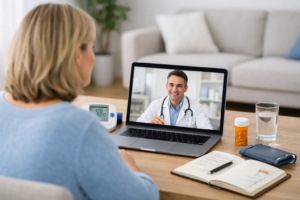

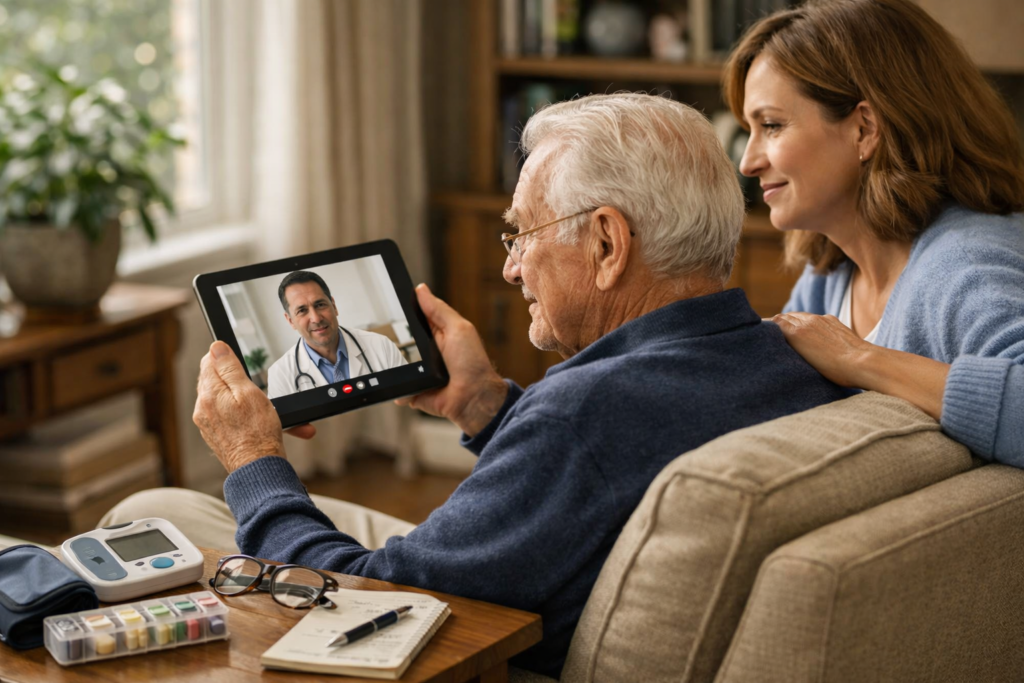
Telehealth has transformed the way a significant portion of the population receives medical care and in the case of seniors, it can be particularly helpful.
In the case of older adults who have to control chronic diseases, are not mobile, or need frequent doctor visits, they are not always able to come to the clinic. Another option is telehealth: a home-based medical consultation, made via a phone, tablet, or computer.
However, what is the actual situation with telehealth among the elderly? Is it safe? And when is it appropriate?
This is a straightforward guide on all that is needed to know by seniors and caregivers.
What Is Telehealth?
Telehealth enables patients to communicate with medical practitioners remotely via video and phone calls, as well as, secure messaging websites. Rather than going to a clinic, same-day online medical consultation can be done by patients in most instances.
In the case of seniors, this translates to the need to have fewer transportation problems and physical stress especially during bad weather or when they lack the ability to move.
Telehealth is particularly beneficial to older adults because of various reasons.
Most of the seniors have chronic health ailments that need frequent check-ups. These might include:
- High blood pressure
- Diabetes
- Arthritis
- Asthma
- Thyroid conditions
- Medication monitoring
In the case of regular follow-ups, telehealth will also eliminate repetition of clinic visits.
The ability to schedule an online doctor from home can simplify the routine of care, particularly to individuals who need their caregivers or relatives to provide transport services.
Most Suitable Common Conditions in Telehealth.
Telehealth functions best when a physical examination is not urgently necessary. It’s particularly useful for:
- Mild respiratory symptoms
- Skin rashes
- Urinary tract infections
- Medication refills
- Minor infections
These cases can be categorized as virtual healthcare of regular diseases, where the symptoms can be discussed in a clear way and assessed by means of conversation, and visual elements.
Here, a telehealth doctor for mild symptoms can deliver safe and timely advice.
Medication Management at its Easiest.
The more a person gets older, the more he/she needs medication adherence. Telehealth makes follow-ups and prescription refills easier.
Many elderly individuals seek the services of an online doctor to have a prescription refill via the internet, especially to continue with the medication that has already been diagnosed and stabilized.
This minimizes missed doses which are due to late appointment schedules.
When is Telehealth the correct option?
Telehealth is beneficial, but has some limits.
It is most applicable as telemedicine care for non-emergency situations. The elderly need to pursue in-service care when they feel:
- Chest pain
- Shortness of breath
- Sudden confusion
- Severe pain
- Falls or injuries
- Acute worsening of symptoms.
Physical check-ups, lab tests and imaging are yet to be done online.
Telehealth is a supplement to conventional care, it does not displace it.
Resolving Technology Issues.
The most frequent queries regarding telehealth in seniors are whether it is too complicated or not.
Factually, a number of platforms are meant to be straightforward. It is even possible to complete some appointments over the phone in case of video overwhelmingness.
Caregivers also have the opportunity to help with:
- Setting up devices
- Logging into appointments
- Note taking on the visit.
Gradually, most seniors learn to be confident with the procedure, and in particular, when they notice how much the routine care is made easier through it.
What Of Safety and Legitimacy?
The telehealth visits are valid provided that the visits are carried out by licensed medical practitioners who abide by the medical standards.
Credible sites will enable the patients to consult with a licensed physician over the internet hence the treatment will be administered by qualified professionals. Standard requirements are privacy protection and secure communications systems.
Similar to any other healthcare service, seniors and caregivers must ensure that the service has made a list of its providers and the way the information of the patients is safeguarded has been clearly stated.
Elderly Costs.
The cost of telehealth is different, yet a significant portion of services have clear fees. In the case of uninsured seniors, an insurance-free online doctor visit can be cheaper than urgent doctor care or frequent visits to the clinic.
Telehealth is becoming a more common coverage in Medicare and other private insurance plans, but it may be more or less beneficial depending on the provider and the area.
Surprises could be avoided by checking coverage in advance.
Caregiver Involvement
The caregiving process can also be made easier through telehealth.
Virtual doctor visits allow family members to make contact with each other, even when living in various places and coordinate the assistance and ask questions directly to the doctor. Such mutual access can enhance communication and minimize the lack of understanding of the treatment plans by the senior.
Telehealth can help decrease the physical burden of traveling and waiting issues in seniors with mobility issues.
A Real-World Example
In most cases, the modern telemedicine services are currently designed in a way that can enable them to be available to a vast variety of the age groups. As an illustration, such services as FastDocNow offer non-emergency conferences with licensed clinicians, which offer patients an option of remote care.
Such platforms can benefit the elderly when used in the right way without affecting medical care quality.
Is Telehealth the Choice Of Every Senior?
Not necessarily.
Telehealth works best when:
- The disease is stable or mild
- The follow-ups should be scheduled.
- Travel is difficult
- Its technology support is in place.
It may not be suitable if:
- Diagnostic testing is necessary frequently.
- Physical tests are required.
- The patient does not like using devices.
Each case is unique and one must make decisions depending on his or her health requirements.
Final Thoughts
Telehealth provides elderly people with an option of keeping in touch with healthcare professionals without necessarily undergoing the stress of attending clinics frequently. By being responsible and applied in due measure, it would enable continuous care to be more accessible and less disruptive.
This is not aimed at substituting face-to-face medicine. It is to make it more flexible, particularly to people who use it most.
Telehealth is not only convenient, but it is also an aiding supporter to regular healthcare to many seniors and caregivers.