
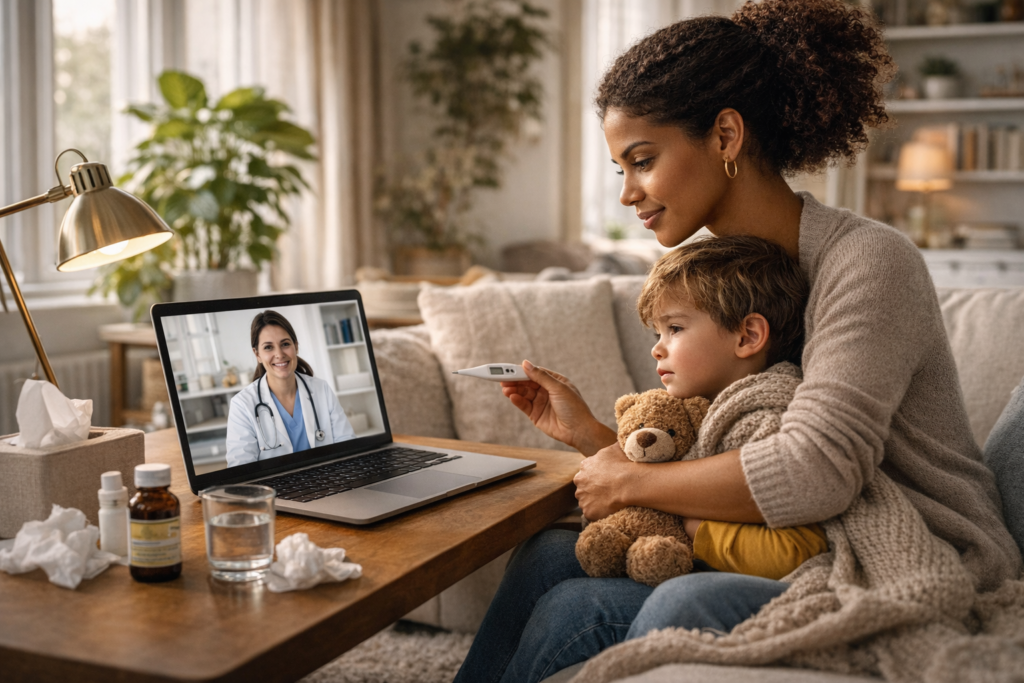
As a parent, it is important to call upon a doctor when your child is unwell. However, this does not always necessarily entail running to a clinic. Telemedicine can offer effective and safe care at home in most cases.
It is not whether telemedicine works or not but when is it appropriate?
That is the key question to a parent seeking care for an unwell child. Another use of virtual care is in the management of some childhood diseases, although it is not yet a substitute in pediatrics. This knowledge of the distinction will assist parents in making safe decisions.
What Is Pediatric Telemedicine?
Pediatric telemedicine provides a chance to a parent or a guardian to visit a licensed medical practitioner through video or phone. Families can make an online medical appointment the same day in most instances as opposed to commuting to a clinic.
This keeps the busy families focused and at the same time making sure that the children get timely care. However, as is the case with adult telemedicine, it operates best under strict boundaries.
Telemedicine: When it Works with Children.
The virtual care may be appropriate in situations of simple and mild symptoms, and more specifically when the child is not in general unstable.
Typical ones are:
- Mild cold or flu symptoms
- Low-grade fever
- Sore throat
- Mild ear pain
- Skin rashes
- Pink eye
- Minor stomach ache
These are in the domain of virtual healthcare of common diseases where often the symptoms are safely evaluated by dialogue and observation.
In such situations, a telehealth doctor for mild symptoms can potentially prescribe treatment, provide some home care options, or decide whether to have in-person visits or not.
When Telemedicine is NOT the Answer.
A child who is experiencing any of the following symptoms must be provided with in-person care by the parents:
- Difficulty breathing
- High or persistent fever in infants.
- Severe abdominal pain
- Dehydration Head injury
- Seizures
- Delirious fatigue or vertigo.
Telemedicine is supposed to be telehealth for non-emergency cases. Emergency symptoms should always be attended to urgently by in-person care. If one is not so sure, then it is better to be on the safe side.
How Telemedicine Appointments For Children Works.
In an average pediatric telemedicine visit, the following elements can be found:
- A discussion of symptoms
- Review of medical history
- Note taking on the child (video observation where possible)
- Follow-up guidance
Parents may be asked to:
- Check temperature
- Give a description of appetite and behavior.
- Demonstrate conspicuous symptoms (rashes)
The availability of a licensed doctor online with whom they can chat enables the parents to ask questions and get professional guidance on time.
Children’s prescription.
In certain specific cases, one can get prescriptions after an assessment. A case in point is the example of a bacterial infection that can be easily detected, the telehealth care provider can prescribe antibiotics .Though it is important to note that a responsible provider will not prescribe antibiotics in an indiscriminate manner.
Parents must be wary of any site which promises any medication without a proper consultation. In the case of continuous treatments, some families resort to telemedicine where a doctor can be seen online to prescribe refills especially when the diagnosis has been determined.
Convenience to the Working Parents.
Flexibility in scheduling is another realistic benefit of pediatric telemedicine. The possibility to make an online doctor appointment at home can save working days and lessen the stress level among parents, in particular, when the symptoms manifest themselves in the middle of the busy week. It also assists in curbing the exposure to other diseases which children are likely to contract in waiting rooms.
What of Uninsured Children?
Family access to healthcare can be a stressful experience when there is no insurance or the family is not covered comprehensively. Under such circumstances, an online doctor visit without insurance can be more predictable in terms of costs compared to an urgent visit or an emergency room in case of non-urgent situations. Nevertheless, price must not win over safety. The emergency symptoms should be always attended immediately in-person.
Safety and Legitimacy
Legitimate services of pediatric telemedicine are based on the same medical standards as face-to-face clinics. The telehealth care givers are certified, the information on the patients is stored and the medical standards meet the guidelines of consultation.
Parents should confirm:
- The provider’s credentials
- Clear privacy policies
- Transparent pricing
- Right consultation practice.
This data is easily accessible on credible websites
A Practical Example
The new trend in telemedicine services has seen many having child-friendly consultation procedures. Indicatively, services such as FastDocNow offer consultancy services on non-emergency conditions that enable families to access licensed clinicians in the quickest time possible without compromising on the quality of medical care. In the right context, sites such as this may assist the families with minor health issues to cope effectively.
Striking the right balance between Convenience and Judgment.
Telemedicine can alleviate the stress of parenting, as well as the suffering of children.
Virtual care works best when:
- Symptoms are mild
- The child is alert and stable
- It is not likely that physical examination will change therapy.
It should not replace:
- Routine pediatric checkups
- Vaccinations
- Developmental screenings
- Emergency care
The parents have the best knowledge of their children. Face to face healthcare analysis is the sure way when it comes to serious or critical situations.
Final Thoughts
Telemedicine gives the family an adaptation option since it is a way of managing common childhood diseases. In the relevant conditions, it may provide care punctually, reduce inconvenience, and provide relief without any unnecessary traveling. It is not aimed at the parents to substitute clinics or pediatricians but to provide them with another weapon to make the right decisions. Virtual care can also be used wisely to promote the health of children without undermining safety.