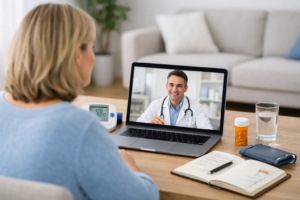

The healthcare industry has evolved significantly and radically within the last decade and one of the largest changes is the advent of telemedicine. What used to seem like a trial idea to access healthcare has become a normal practice through which people can now access healthcare at in a fast and convenient way and in most cases at reduced cost.
However, what is telemedicine, how can it work and when (or why) should (or should not) you use it?
This is dissected in this guide.
What Is Telemedicine?
Telemedicine is the provision of medical care through digital communication tools like video conferencing, telephone discussions, or messaging platforms. Patients do not have to go to an actual clinic; they can speak to a medical expert via digital means. At least in a straightforward practical sense, telemedicine has created an opportunity where individuals can receive an online medical consultation any time of the day and talk about their symptoms, receive medical counseling and in certain instances, have prescriptions given without leaving their homes. It is normally applied in non-emergency health matters, follow-ups and routine visits.
How Telemedicine Works
Although the platforms might vary, the majority of telemedicine services have a similar workflow:
- Register on a telemedicine platform.
Patients will be registered and fill in the basic medical details.
- Select the form of consultation.
This could be a video session, phone session or chat based visit depending on the service.
- Refer to a medical practitioner.
You are connected with a specialist, where in most cases you are able to speak with a licensed doctor in the U.S within minutes.
- Assessment and treatment
The physician examines the symptoms, poses follow-up inquiries and prescribes medications.
- Prescriptions or next steps
Patients can be able to see a doctor online to have a prescription refilled or get directions on subsequent care, should they deem necessary. The whole process may occur online, eliminating traveling expenses and waiting room time wastage.
Types of common conditions that are treated by the use of telemedicine.
Telemedicine is not an emergency tool, but it works very well with routine medical issues. There are numerous sites where virtual healthcare is offered regarding general conditions, among which are:
- Colds and flu
- Sinus infections
- Sore throat
- Skin rashes
- Urinary tract infections
- Mild allergies
- Medication refills
Numerous telemedicine systems today can enable patients to meet licensed clinicians on non-emergency issues like colds, sinus infections, UTIs, or to request prescription refills. As an example, some services such as FastDocNow are online consultations on common conditions, and they may not be insured or may have lengthy waiting lines.
Benefits of Telemedicine
1. Convenience and Speed
The convenience of telemedicine is one of the largest benefits of the practice. No lines, exhausting forms, sterile waiting bays which are aggressive, and the risk of finding a doctor who might not be the right person to suit your particular needs. Numerous telehealth services provide fast appointments, and thus it is possible to get health care without waiting long and struggling with arranging appointments. Although it is also commendable that telemedicine does not substitute physical consultation when it is necessary but rather complements it, there is nothing that can match the ease with which one can pick up his phone and access a doctor.
2. Access to Care
Telemedicine enables patients in far off places or busy people to get the care that they might otherwise postpone without incurring any additional anxiety. It is also conducive that telemedicine treats non-emergency cases, in that way, it removes pressure from the physical clinics, which is beneficial to all parties.
3. Cost Savings
This is the other significant advantage of telemedicine. Patients are seeking cheaper options of telemedicine visits instead of face-to-face visits mostly as routine cases. Telemedicine is also cost-efficient because it takes the patient to the doctor and bypasses all the intermediaries that may pose additional time and financial burdens to the patient.
4. Care Without Insurance
Telemedicine may be a saving grace to uninsured patients. There are online doctor visits without insurance and even virtual urgent care without insurance available on some platforms to enable people to obtain care without tremendous upfront expenses in the USA. The significance of receiving the necessary healthcare without setting a worry about insurance cannot be overestimated.
Telemedicine Limitations and Risks.
Telemedicine is not necessarily the ideal, despite all its great benefits. Here is why;
- Scanty Physical Examination.
Doctors are not able to conduct hands-on examinations in situations where it is required, so some of the conditions might need a face-to-face follow-up.
- Not in case of Emergencies
Chest pain, severe injuries and life-threatening symptoms cannot be treated via telemedicine. Emergency care is one of the things that must be covered immediately.
- Technology Barriers
It requires good internet access and technology and this can be challenging to certain patients.
Is Telemedicine Safe?
Telemedicine is a generally safe and useful option when used appropriately. When the license workers are involved, medical guidelines are available to them, they possess patient confidentiality and refer them to personal care.
Such conditions as UTIs, e.g, can be treated via telemedicine, as long as the symptoms are clear and described in an easy manner. The trick is to apply telemedicine to the right cases and be straightforward about the symptoms.
Who is to take Telemedicine into account?
Telemedicine is appropriate for:
- Mild or recurring symptoms
- Adults and supervised children
- Patients that want rapid consultations.
- Uninsured patients.
- Individuals who require a prescription refill.
- The ones who cannot pay a visit to a clinic without difficulty.
- It is particularly beneficial to individuals with stressful time consuming work schedules or care giving responsibilities and who still require timely care.
Conclusion
Telemedicine has transformed the access to healthcare, causing medical consultation to be quicker, more convenient, and even cheaper. Although it may not be the direct substitute to conventional healthcare, it is a crucial part of modern healthcare, particularly in case of ordinary and non-emergency issues. Knowledge of the time and method of using telemedicine enables patients to make better decisions concerning healthcare by spending less time but not sacrificing safety. Due to the ongoing growth of telemedicine, the use of platforms with quick and convenient consultations is becoming an ever more common aspect of healthcare.